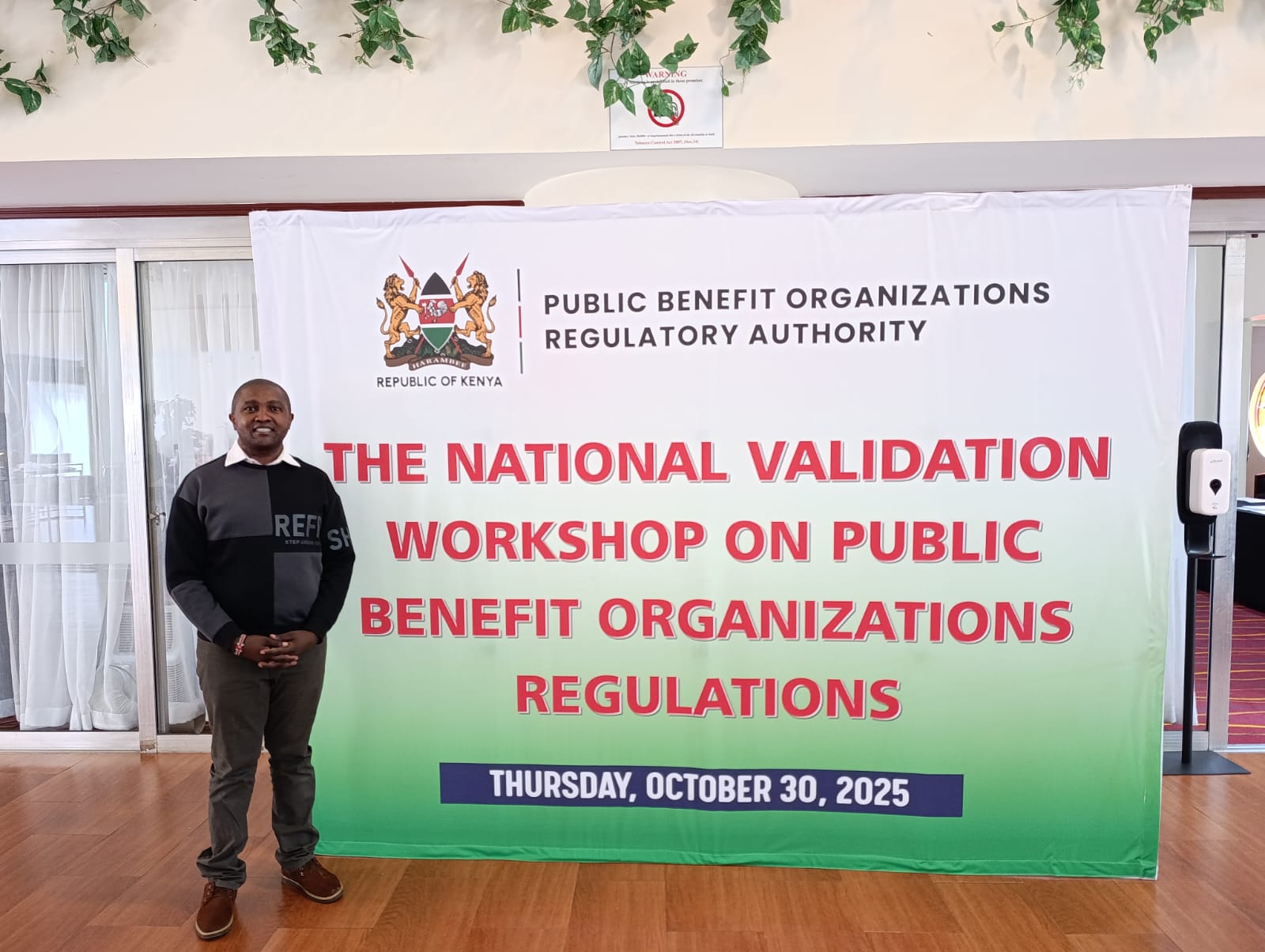
Mt. Kenya Network Forum (MKNF) participated in the validation of the draft Public Benefit Organizations (PBO) Regulations, a significant policy process shaping the future of civic engagement and public benefit governance in Kenya. The session brought together civil society actors, legal experts, and policy stakeholders to review the framework intended to operationalize the Public Benefit Organizations Act. :contentReference[oaicite:1]{index=1}
For MKNF, this was not a routine policy meeting. It was an important opportunity to defend an enabling environment for civil society and to ensure that the regulatory framework does not end up weakening the very organizations that serve communities most directly.
Challenging restrictive provisions
During the validation process, MKNF raised concerns about provisions in the draft regulations that could undermine the independence, participation, and accountability of grassroots and community-based organizations. The Forum emphasized that while regulation is necessary for transparency and integrity, it should not become a barrier to community-led development or a tool for administrative control over legitimate public benefit actors. :contentReference[oaicite:2]{index=2}
One of the major issues highlighted was ambiguity around registration and renewal procedures. MKNF warned that this could create unnecessary bureaucratic bottlenecks, especially for smaller community organizations that do not have the administrative resources to absorb repeated regulatory transitions. :contentReference[oaicite:3]{index=3}
Regulation should strengthen transparency and public trust — not create uncertainty, duplication, or administrative pressure that weakens grassroots organizations.
Defending the autonomy of civil society
MKNF also stressed that the strength of Kenya’s civil society lies in its diversity, ranging from national organizations to local community movements. Because of this, any regulatory framework must protect organizational autonomy rather than centralize control. The Forum warned that parts of the draft, as worded, could enable overreach by public authorities in ways that conflict with the spirit of self-regulation envisioned in the PBO Act. :contentReference[oaicite:4]{index=4}
This matters because a vibrant civil society is not a threat to good governance. It is one of its strongest allies — especially when it helps communities participate, demand accountability, and improve service delivery.
 Fair civic regulation matters because community organizations
need room to operate, participate, and serve effectively.
Fair civic regulation matters because community organizations
need room to operate, participate, and serve effectively.
Advancing transparency without punitive oversight
MKNF supported the principle of transparency, but urged the drafters to strike a careful balance between oversight and operational freedom. The Forum recommended that compliance mechanisms should strengthen accountability through collaborative monitoring rather than punitive reporting demands. :contentReference[oaicite:5]{index=5}
That distinction is critical. Oversight is necessary, but it should not be designed in ways that generate fear, over-reporting, or unnecessary administrative pressure. The best regulatory systems support integrity while still allowing organizations to focus on their mission and impact.
A call for inclusive regulation
MKNF reaffirmed that meaningful regulation must emerge from genuine consultation and respect for stakeholder diversity. The Forum also reiterated its willingness to collaborate with government and peer organizations in refining the PBO Regulations so that they better reflect Kenya’s democratic aspirations and the realities facing community organizations on the ground. :contentReference[oaicite:6]{index=6}
This position is not anti-regulation. It is pro-fairness, pro-accountability, and pro-enabling civic space. It is about ensuring that regulation strengthens, rather than suffocates, organizations that contribute to public good.
Looking ahead
As the validation process moves toward finalization, MKNF continues to stand for a transparent, fair, and inclusive policy framework that empowers communities and strengthens Kenya’s civil society ecosystem. An enabling environment for Public Benefit Organizations is essential to unlocking community potential and supporting sustainable development. :contentReference[oaicite:7]{index=7}
This is why MKNF’s intervention matters. It reflects a long-term commitment to protecting civic participation, defending grassroots voice, and ensuring that governance frameworks remain aligned with democracy, accountability, and community-led progress.